
Improvement in symptoms
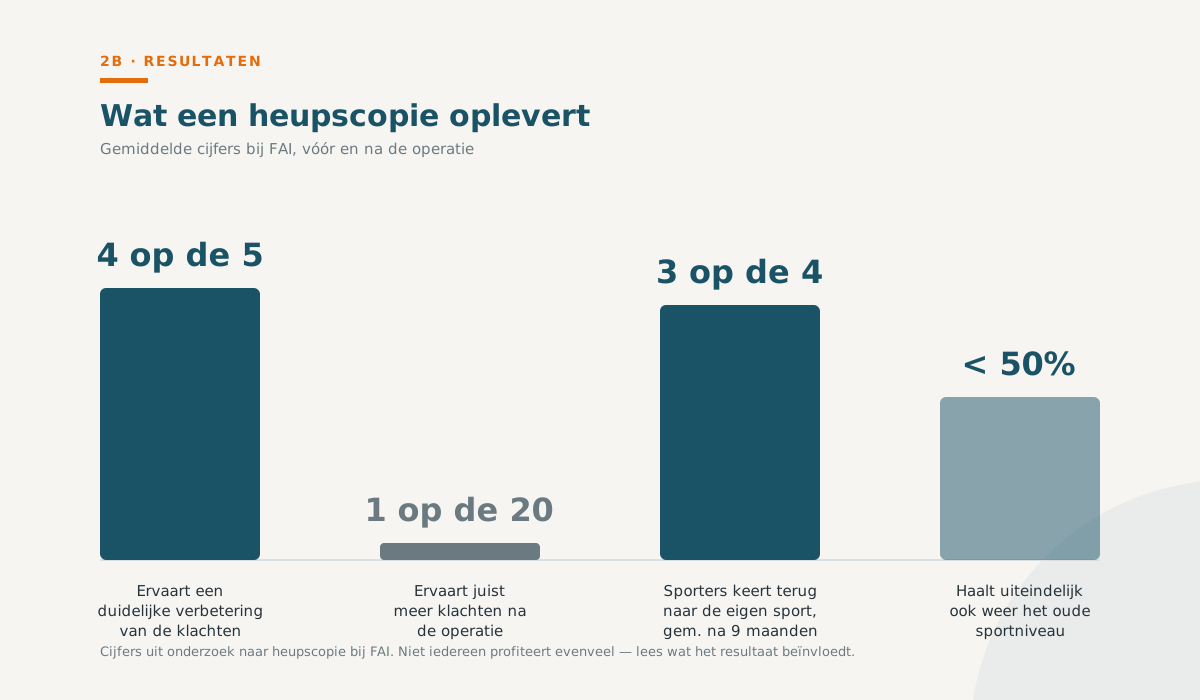
Research shows that around 4 in 5 people who undergo hip arthroscopy for FAI experience significant improvement in their symptoms compared with before surgery. In around 1 in 20 people, symptoms actually worsen compared with before surgery.
Repair or removal: a difference in durability
If the labrum can be repaired rather than removed, the result tends to hold up better in the medium term. Repairing the labrum may also offer better protection against the development of osteoarthritis in the medium to long term; removing the labrum may slightly speed up that process instead. For this reason, repairing the labrum is preferred over removing it, wherever possible.
Return to sport
Of the athletes who try to return to sport after a hip arthroscopy, around 3 in 4 return to their previous sport, on average after around 9 months. Fewer than half eventually regain their previous sporting level. How quickly and fully this succeeds depends on your sport, starting level and recovery.
What affects the result
Not everyone benefits equally. Factors associated with a less predictable result include: existing cartilage damage or a narrow joint space, older age, higher body weight, smoking, hip dysplasia, and symptoms that have already lasted longer than two years. If you are young, physically active, without cartilage damage and of a healthy weight, your chances of a good result are highest.
Factors that affect the result
Young age — positive
No cartilage damage — positive
Healthy weight (BMI) — positive
Repairing rather than removing the labrum — positive
Cartilage damage or narrow joint space — negative
Smoking — negative
Hip dysplasia — negative
Symptoms lasting longer than 2 years — negative